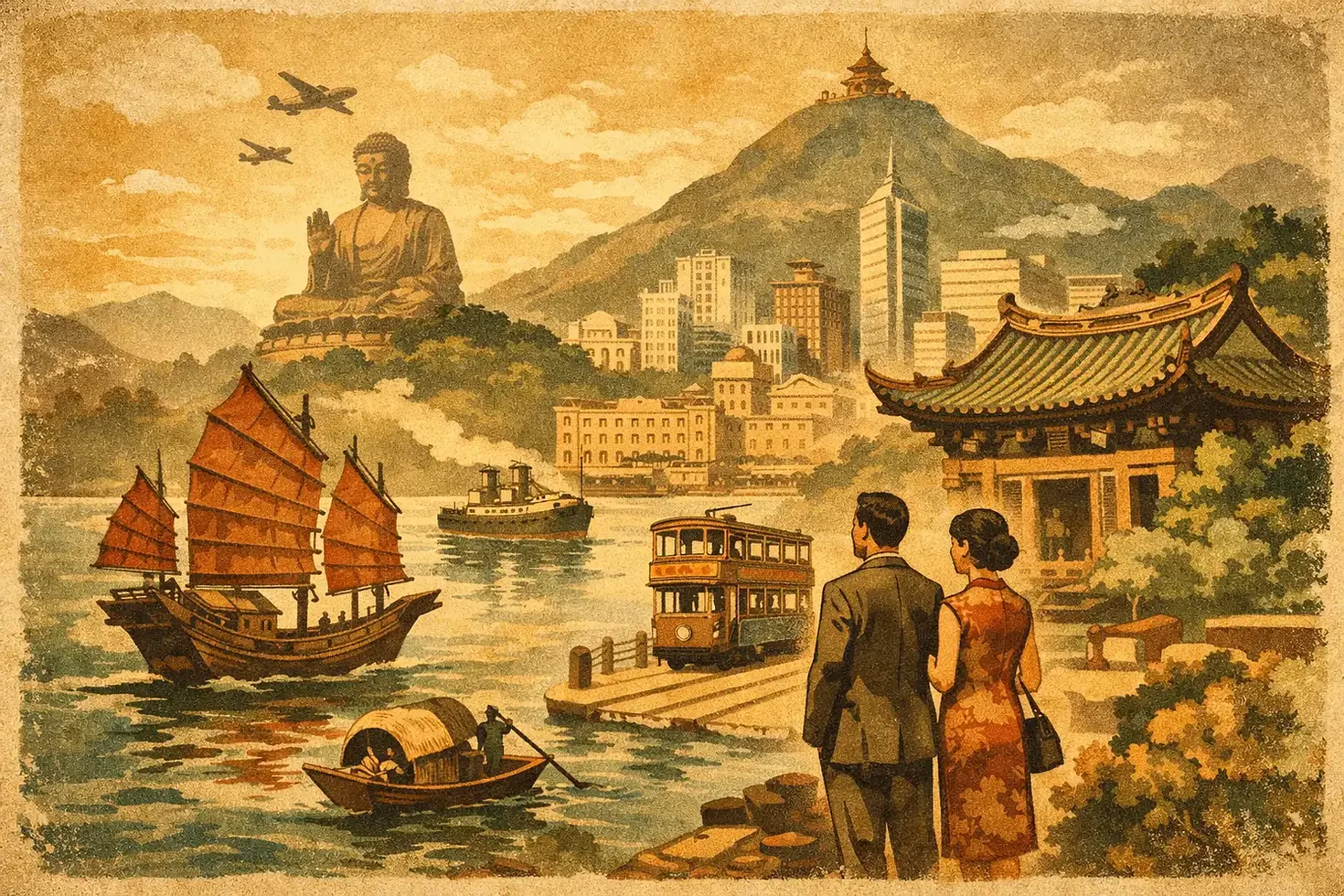
Hong Kong Culture and History Explained
Stand on a Hong Kong street for five minutes and the city tells on itself. A temple curls incense into the air beside a glass office tower. A dai pai dong legacy dish appears a few blocks from a sleek cocktail bar. A tram rattles past luxury storefronts and old tong lau buildings that have somehow held their ground. That tension, and that harmony, is the real entry point into Hong Kong culture and history.
For travellers, this matters because Hong Kong is not a place best understood through a checklist of landmarks. It reveals itself in layers. The city’s most memorable moments often come when you understand why one neighbourhood feels fiercely traditional, why another feels unmistakably international, and why both belong to the same story.
Why Hong Kong culture and history feel so distinct
Hong Kong’s identity was shaped by geography as much as politics. A deep natural harbour made it valuable long before modern tourism arrived, and its position on the edge of southern China turned it into a meeting point for trade, migration and exchange. What followed was not a neat cultural timeline but a constant process of adaptation.
Before British rule began in 1841, the area was home to fishing communities, Hakka villages, farmers, salt producers and coastal traders. Clans settled in what are now the New Territories, leaving behind walled villages, ancestral halls and temples that still offer a very different side of Hong Kong from the central skyline most visitors know first.
The colonial era changed the city radically. British administration reshaped law, education, planning and commerce, while Chinese communities remained the cultural heart of everyday life. Over time, Hong Kong developed a character that was neither simply British nor simply mainland Chinese. It became its own place - commercial, fast-moving, pragmatic and deeply local.
That dual inheritance still shows up everywhere. You see it in street names and legal institutions, in milk tea and dim sum, in bilingual signage and public rituals, in the confidence of a city used to moving between worlds.
A short history that still shapes the present
To understand Hong Kong properly, it helps to keep a few turning points in mind. The first is the Opium War and the cession of Hong Kong Island to Britain in 1842, followed later by Kowloon and the lease of the New Territories. These events transformed a collection of coastal settlements into a major colonial port.
The second is migration. Across the 19th and 20th centuries, and especially during periods of upheaval in China, waves of people arrived in Hong Kong bringing labour, capital, cuisine, dialects and entrepreneurial energy. Refugees, factory owners, artists and merchants all helped build the city. This is one reason Hong Kong culture feels so dense - it was shaped by people who had to rebuild quickly and make space for old traditions in a new urban setting.
The Japanese occupation during World War II left deep scars, followed by post-war recovery and rapid industrialisation. By the 1950s through to the 1970s, Hong Kong was manufacturing everything from textiles to toys. Entire districts grew around workshops, housing estates and small businesses. Later, the economy shifted towards finance, logistics, property and professional services, giving rise to the vertical city many travellers recognise today.
Then came 1997, when sovereignty transferred from Britain to China. That moment remains central to any conversation about Hong Kong’s modern identity. It shaped politics, law, public feeling and the city’s relationship with the world. For visitors, the key point is not to reduce Hong Kong to headlines. Its history is alive in daily life, but it is also carried in food, language, architecture and neighbourhood habits that can be easy to miss without context.
Culture in Hong Kong is lived, not staged
One of the pleasures of travelling here is that culture is not tucked away for special occasions. It lives on the street. Wet markets begin before many visitors are awake. Locals queue for roast meats with clear opinions about who does it best. Temple festivals, lion dances, flower markets and ancestral rituals continue not as performances for outsiders but as part of community life.
Religion and folk belief are woven into this picture. Buddhism, Taoism, Confucian values and local spiritual practices overlap in ways that can feel fluid rather than rigid. In one day, you might pass a small roadside shrine, a major temple, and the Da Siu Yan practitioners symbolically cursing enemies and warding off bad luck. None of this feels unusual in Hong Kong. It feels embedded.
Language is another key to the city. Cantonese carries humour, rhythm and local identity in a way translation rarely captures fully. English remains widely used in many sectors, and Mandarin has a growing presence, but Cantonese is still the emotional soundscape of Hong Kong. Even learning a few words can change how a place opens up to you.
Neighbourhoods tell the story better than monuments
If you want a clearer sense of Hong Kong culture and history, neighbourhoods often reveal more than headline attractions. Central shows the colonial and corporate layers of the city in close formation - banking towers, historic institutions, hillside stairways and old market streets all compressed together.
Sheung Wan and Sai Ying Pun offer a particularly rich mix of old and new. Traditional dried seafood shops, temples and herbal tea stores sit alongside design studios, wine bars and contemporary restaurants. The appeal is not novelty for its own sake. It is the way the city keeps repurposing itself without entirely wiping away what came before.
In Kowloon, places such as Yau Ma Tei, Sham Shui Po and Mong Kok bring you closer to everyday urban intensity. Here you feel Hong Kong’s density, speed and resourcefulness. Markets, family-run eateries, hardware stores, old apartment blocks and specialist shops create a streetscape that is practical, lived-in and full of character.
Head further out and another Hong Kong appears. Fishing villages, islands, hiking trails, monasteries and older rural settlements show that the city is not only about high-rise life. For many travellers, that contrast becomes one of the biggest surprises. Hong Kong can feel global and intimate, vertical and deeply natural, all within the same day.
Food is one of the clearest expressions of history
Hong Kong’s food culture is not just delicious - it is historical evidence. Cantonese culinary traditions provide the backbone, but migration, trade and colonial influence have left a strong mark. Think cha chaan teng cafés serving milk tea, pineapple buns and baked rice dishes. Their menus reflect a local reinterpretation of Western ingredients and formats, shaped by a working city that made foreign ideas its own.
Dim sum is the famous entry point, and rightly so, but it is only one part of the story. Seafood traditions speak to the city’s coastal roots. Roast goose and char siu carry the craft of Cantonese roasting. Noodle shops, claypot rice, tofu desserts and late-night street snacks each reflect different chapters of local life.
Even Hong Kong’s bar scene can tell a cultural story. Craft beer, cocktail culture and modern dining have grown rapidly, yet the best versions still feel grounded in place. The city is particularly good at blending polish with informality - high standards without stiffness.
The past is visible in the built environment
Hong Kong architecture often gets reduced to skyscrapers, but that misses the point. The city’s built environment is a record of economic ambition, colonial planning, housing pressure and social change. Glass towers matter, but so do market buildings, public housing estates, tong lau shophouses, ferry piers and military remnants.
Preservation here is complex. Land is scarce, development pressure is intense and nostalgia does not always win. That means some pieces of old Hong Kong disappear quickly, while others survive through adaptive reuse or strong local attachment. For visitors, this creates a bittersweet but fascinating urban texture. You are not seeing a city frozen in time. You are seeing one negotiate memory in real time.
Why context changes the way you travel
A first-time visitor can enjoy Hong Kong without knowing any of this, but understanding the backstory makes the experience far richer. A temple visit means more when you understand the communities that built it. A ferry ride feels different when you see the harbour as the reason the city exists in its present form. Even a simple meal becomes more memorable when you recognise the migration and improvisation behind it.
This is also why personalised travel works so well here. Hong Kong rewards curiosity, but it does not always explain itself. The right guide, route or neighbourhood focus can turn a pleasant day into something far more vivid and personal. For travellers who want more than standard sightseeing, White Tiger Tours is built around exactly that idea - helping you experience the city in a way that feels effortless, personal and memorable.
The best way to meet Hong Kong is not to rush at it. Give it time to show its layers, ask better questions as you walk, and let the city move beyond postcard views. That is when its culture and history stop feeling like background information and start becoming the trip itself.


Comments